Is your wooden cutting board looking a bit worn out or stained? You’re not alone.
Many people struggle to keep their wooden cutting boards clean and fresh. But here’s the good news: cleaning it effectively doesn’t have to be a daunting task. In fact, with a few simple steps, you can restore your wooden cutting board to its former glory.
Imagine the satisfaction of seeing it spotless and ready for your next culinary adventure. You’ll not only extend its lifespan but also ensure it’s safe for food preparation. Curious to know how? Dive into this guide and discover the secrets to maintaining a pristine wooden cutting board that you’ll be proud to show off in your kitchen. Let’s get started!

Credit: homewithgraceandjoy.com
Choosing The Right Cleaning Tools
Cleaning a wooden cutting board needs the right tools. Using proper tools keeps the wood safe and clean.
Soft brushes and natural cleaners work best. They remove dirt without damaging the surface.
Soft Brushes And Sponges
Soft brushes clean deep in the wood grooves. They do not scratch or harm the board.
Sponges should be gentle and non-abrasive. Avoid rough scrubbers that can roughen the wood.
- Use soft nylon or natural bristle brushes
- Choose sponges labeled as non-scratch
- Replace sponges often to avoid bacteria
- Dry brushes and sponges after use
Natural Cleaning Agents
Natural cleaners work well without chemicals. They keep the board safe for food.
Common agents include vinegar, lemon, and baking soda. These remove stains and odors gently.
- White vinegar kills bacteria and cleans
- Lemon juice removes stains and smells fresh
- Baking soda scrubs without scratching
- Use warm water to rinse after cleaning
Daily Cleaning Steps
Cleaning your wooden cutting board every day keeps it safe and fresh. It stops germs from growing and keeps the board in good shape.
Use simple steps to clean your board well. This helps the wood last longer and stay healthy for food preparation.
Rinsing And Scrubbing
Start by rinsing your cutting board with warm water. This removes loose food bits and dirt.
Use a soft brush or sponge with mild dish soap to scrub the board. Clean all sides, including edges.
- Rinse the board under warm water.
- Apply mild dish soap to a sponge or brush.
- Scrub the surface gently but thoroughly.
- Make sure to clean the edges and sides.
- Rinse off all soap with warm water.
Drying Techniques
After rinsing, dry your cutting board quickly to prevent water damage. Use a clean towel to wipe it down.
Stand the board upright or lean it against a wall. This helps air flow around it so it dries faster.
- Wipe the board with a dry towel immediately.
- Place the board standing up to air dry.
- Avoid laying the board flat while wet.
- Keep the board in a well-ventilated area.
Deep Cleaning Methods
Wooden cutting boards need deep cleaning to stay safe and fresh. Regular washing might not remove all stains or odors.
Deep cleaning helps remove bacteria and keeps the wood in good shape. Try these simple, natural ways to clean your board.
Salt And Lemon Treatment
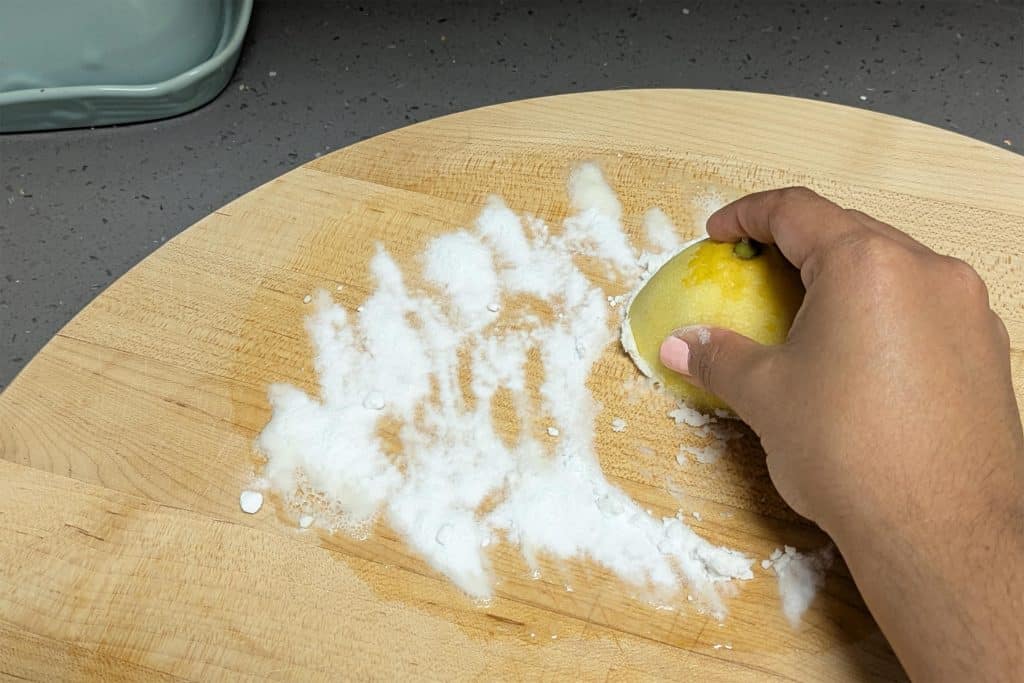
Sprinkle coarse salt over the cutting board surface. The salt helps scrub away stains and bacteria.
Cut a lemon in half and rub it over the salt. Lemon juice acts as a natural cleaner and deodorizer.
- Cover the board with coarse salt
- Rub the salt with lemon halves
- Let it sit for 5 minutes
- Rinse with warm water and dry
Baking Soda Paste
Mix baking soda with water to make a thick paste. Baking soda is gentle and removes odors and stains.
Spread the paste on the board and scrub with a soft brush. This cleans deep into the wood grain.
- Combine 3 parts baking soda with 1 part water
- Apply paste to the cutting board
- Scrub gently with a brush or sponge
- Rinse well and dry completely
Deodorizing The Board
Wooden cutting boards can absorb smells from food. Cleaning them well helps remove odors. Deodorizing keeps your board fresh and ready to use.
Simple natural ingredients work great to remove bad smells. Two popular options are vinegar rinse and essential oils.
Vinegar Rinse
Vinegar is a natural deodorizer and disinfectant. It helps kill bacteria and remove strong smells from wooden boards.
To deodorize with vinegar, rinse your board with white vinegar. Let it sit for a few minutes, then wipe it clean with a damp cloth.
- Use plain white vinegar, not flavored types
- Do not soak the board for too long
- Dry the board completely after rinsing
Essential Oils
Essential oils like lemon or tea tree oil help freshen the board. They also have natural antibacterial properties.
Add a few drops of essential oil to a clean cloth. Rub the oil gently over the board’s surface to remove odors and add a fresh scent.
- Lemon oil leaves a citrus scent and fights bacteria
- Tea tree oil is strong and cleans well
- Use only a few drops to avoid overpowering smell
Preventing Cracks And Warping
Wooden cutting boards can crack and warp if not cared for properly. Keeping them dry and avoiding too much water helps them last longer.
This guide shows how to dry your board right and why soaking is harmful.
Proper Drying
Dry your wooden cutting board thoroughly after washing. Use a clean towel to remove water from all sides. Stand the board upright to air dry fully.
- Wipe off excess water with a dry cloth
- Place the board on its edge to dry
- Avoid stacking wet boards on top of each other
- Let the board dry completely before storing
Avoiding Soaking
Soaking wooden boards in water causes swelling and warping. Water can enter the wood fibers and make cracks form as it dries.
| Why Avoid Soaking | Effect on Board |
| Water absorption | Swells wood fibers |
| Long drying time | Leads to warping |
| Weakens glue joints | Board splits or cracks |
| Harbors bacteria | Unhealthy surface |

Credit: food52.com
Maintaining With Oil
Oiling a wooden cutting board keeps it strong and safe. It stops the wood from drying and cracking.
Regular oiling also helps stop stains and odors from soaking in. It makes the board last longer.
Choosing The Right Oil
Use food-safe oils that do not go bad quickly. Avoid cooking oils like vegetable or olive oil. These oils can turn sticky and smell bad.
Good oils for cutting boards include mineral oil and beeswax. These keep the wood smooth and protected.
- Mineral oil: clear, odorless, and easy to find
- Beeswax: adds extra protection and shine
- Coconut oil (refined): resists spoiling, safe for food
Application Frequency
Oil your cutting board often to keep it in good shape. The exact time depends on how much you use it.
If you use your board every day, oil it once a week. For less use, oil it once a month or after washing.
- Look for dryness or dullness on the wood surface
- Apply oil when the board looks or feels dry
- Regular oiling stops cracks and warping
Avoiding Common Mistakes
Cleaning a wooden cutting board is important to keep it safe and long-lasting. Some cleaning habits can harm the wood or make it unsafe.
Learn about two common mistakes people make. Avoiding these helps your board stay clean and strong.
Dishwasher Use
Never put a wooden cutting board in the dishwasher. The heat and water can cause the wood to crack and warp.
Dishwashers use strong jets and high temperatures. This damages the wood and reduces the board’s life.
- Wood absorbs water in the dishwasher.
- High heat dries the wood too fast.
- Boards may split or lose shape.
Harsh Chemicals
Avoid using bleach or strong cleaners on wooden boards. These chemicals can eat away the wood and leave harmful residues.
Use mild soap and warm water instead. Harsh chemicals dry out the wood and cause cracks or rough surfaces.
- Harsh chemicals strip natural oils from wood.
- They can leave unsafe residues on the board.
- Mild soap cleans well without damage.
Credit: www.thekitchn.com
Frequently Asked Questions
How Often Should I Clean A Wooden Cutting Board?
Clean your wooden cutting board after each use. Wash it with warm, soapy water and dry immediately. This prevents bacteria buildup and maintains the wood’s quality over time.
Can I Use Bleach To Clean Wooden Cutting Boards?
Avoid using bleach on wooden cutting boards. It can damage the wood fibers and leave harmful residues. Instead, use natural cleaners like vinegar or lemon for safe disinfection.
How Do I Remove Stains From Wooden Cutting Boards?
To remove stains, sprinkle coarse salt or baking soda on the board. Rub it with a lemon half and let it sit for 5 minutes. Rinse with warm water and dry thoroughly.
Is It Safe To Put Wooden Cutting Boards In The Dishwasher?
No, avoid putting wooden cutting boards in the dishwasher. The heat and water can cause warping and cracking. Hand wash them gently to preserve their lifespan.
Conclusion
Cleaning a wooden cutting board is simple and important. Regular washing stops germs from growing. Use mild soap and warm water to scrub gently. Dry the board well to keep it strong and safe. Oil the wood sometimes to stop cracks and warping.
A clean board lasts longer and stays fresh. Keep these steps in mind for safe cooking. Your kitchen will stay healthy and your cutting board will look good. Easy care makes a big difference every day.