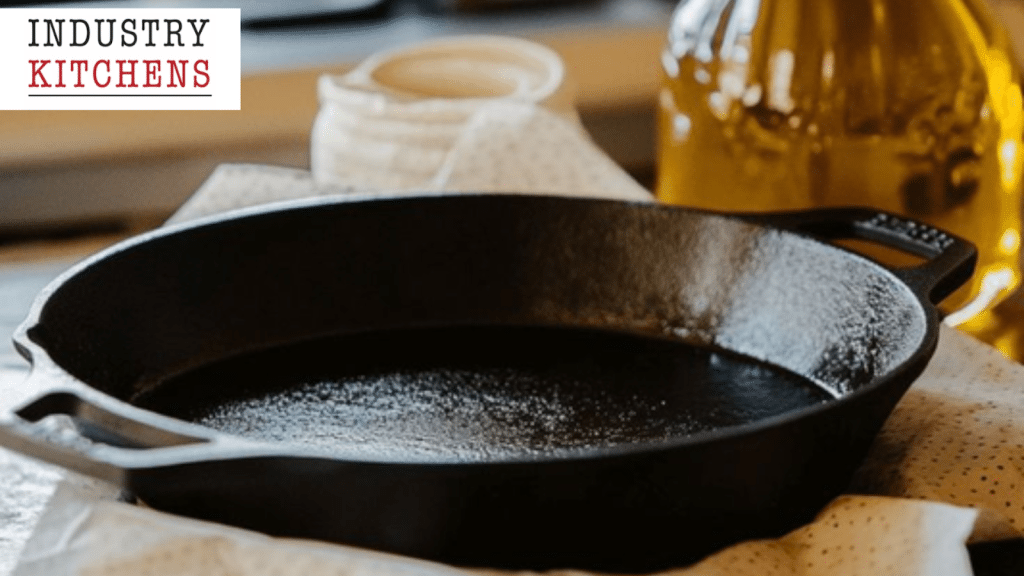
If you love cooking with a cast iron skillet, you know how important it is to keep it well-seasoned. Seasoning your skillet not only protects it from rust but also creates a natural, non-stick surface that makes cooking and cleaning easier.
Using flaxseed oil is one of the best ways to get a durable, smooth seasoning layer. You’ll discover simple, step-by-step instructions to season your cast iron skillet with flaxseed oil. By the end, your skillet will be ready to deliver perfect meals every time.
Keep reading to find out how you can transform your cast iron skillet into a kitchen powerhouse.

Credit: www.industrykitchens.com.au
Why Choose Flaxseed Oil
Seasoning a cast iron skillet helps create a non-stick surface. Flaxseed oil is a popular choice for this process. It forms a hard, durable layer on the skillet.
This oil works well because it dries and bonds tightly. It helps protect the pan from rust and damage. Let’s explore why flaxseed oil stands out.
Flaxseed Oil Properties
Flaxseed oil is made from flax seeds. It has a high amount of omega-3 fatty acids. These fats dry quickly when exposed to heat and air.
Because it dries fast, flaxseed oil creates a hard, smooth coating. This coating sticks well to cast iron surfaces.
- Rich in polyunsaturated fats
- Dries and hardens quickly
- Forms a strong, durable layer
- Natural and food-safe
Benefits For Cast Iron
Flaxseed oil builds a tough seasoning layer on your skillet. This layer prevents rust and stops food from sticking.
The oil’s drying ability helps the seasoning last longer. It also makes the skillet easier to clean after cooking.
- Creates a strong, non-stick surface
- Protects against rust
- Lasts through many uses
- Makes cleaning easier
Comparison With Other Oils
Other oils like vegetable, canola, or olive oil also work for seasoning. But flaxseed oil stands out because it dries faster and harder.
Some oils stay sticky or soft after heating. Flaxseed oil forms a solid, smooth coating that lasts longer.
| Oil Type | Drying Speed | Coating Hardness | Durability |
|---|---|---|---|
| Flaxseed Oil | Fast | Very Hard | High |
| Vegetable Oil | Slow | Soft | Medium |
| Canola Oil | Medium | Medium | Medium |
| Olive Oil | Slow | Soft | Low |
Preparing Your Skillet
Before seasoning your cast iron skillet with flaxseed oil, it is important to prepare the pan properly. This process ensures the oil bonds well to the surface.
Cleaning, drying, and removing any rust or residue are key steps. These steps help keep your skillet in great shape for cooking.
Cleaning The Pan
Start by washing the skillet with warm water. Use a soft brush or sponge to remove any dirt or leftover food.
Avoid using soap or harsh detergents. They can strip the skillet’s natural oils and harm the seasoning.
Drying Techniques
After washing, dry the skillet right away. Use a clean towel to wipe off all water.
To remove any remaining moisture, place the skillet on low heat for a few minutes. This step prevents rust from forming.
Removing Rust And Residue
If your skillet has rust or stuck residue, scrub it gently with steel wool or a scrub pad. Focus on rusty spots until they disappear.
Rinse the skillet well after scrubbing. Dry it completely before applying flaxseed oil for seasoning.
Applying Flaxseed Oil
Seasoning a cast iron skillet with flaxseed oil makes it non-stick and rust-resistant.
Flaxseed oil creates a strong, hard coating when applied correctly.
Choosing The Right Amount
Use a small amount of flaxseed oil for seasoning. Too much oil can make the surface sticky.
- Start with one teaspoon for a large skillet
- Spread the oil evenly over the entire surface
- Wipe off any excess oil with a clean cloth
Coating Methods
Apply the oil using either a cloth or a paper towel. Both work well for thin, even layers.
| Method | How to Apply | Tip |
| Cloth | Dip cloth in oil and rub skillet surface | Use lint-free cloth for best results |
| Paper Towel | Pour oil on towel and wipe skillet gently | Use a fresh towel to avoid clumps |
Avoiding Sticky Residue
Sticky residue happens if too much oil is left on the skillet before heating.
- Always wipe off extra oil until the surface looks dry
- Heat the skillet immediately after applying oil to cure the layer
- Use a high oven temperature for 1 hour to set the seasoning
Baking Process
Seasoning a cast iron skillet with flaxseed oil requires careful baking. This process creates a strong, non-stick surface.
Understanding the right oven settings helps you get the best results for your skillet’s seasoning.
Oven Temperature Settings
Set your oven to a temperature that allows flaxseed oil to polymerize well. The ideal temperature is around 450°F (232°C).
- Preheat the oven to 450°F (232°C).
- Place the skillet upside down on the oven rack.
- Put a foil sheet below to catch drips.
Duration For Each Layer
Each layer of flaxseed oil needs enough time in the oven to bond properly with the skillet’s surface.
| Number of Layers | Baking Time per Layer |
|---|---|
| 1 | 1 hour |
| 2 | 1 hour each |
| 3 or more | 1 hour each, with cooling in between |
Cooling Tips
Allow the skillet to cool naturally in the oven after baking. This prevents cracking and helps the seasoning set.
Follow these tips for cooling:
- Turn off the oven and leave the skillet inside.
- Let the skillet cool for at least 1 hour.
- Remove the skillet only when it reaches room temperature.
Building Multiple Layers
Seasoning a cast iron skillet with flaxseed oil creates a strong, non-stick surface. Building many thin layers helps protect your skillet. Each layer adds more durability and shine.
This process needs patience. Applying multiple coats and baking each layer properly gives the best results. Let’s explore how to do it step by step.
Number Of Coats Needed
For a good seasoning, apply 5 to 7 thin coats of flaxseed oil. Too few layers may not protect the skillet well. Too many layers can cause flaking.
Thin coats dry faster and bond better. Use just enough oil to cover the surface without dripping.
- Apply a thin layer of flaxseed oil
- Wipe off excess oil completely
- Repeat until 5 to 7 layers are done
Repeating The Seasoning Cycle
After applying each coat, bake the skillet in the oven at 450°F (232°C) for one hour. This heat polymerizes the oil, forming a hard layer.
Let the skillet cool completely before adding the next coat. Repeat this process for every layer to build a strong finish.
- Apply thin flaxseed oil coat
- Bake at 450°F (232°C) for 60 minutes
- Cool down fully before next coat
- Repeat until desired layers are built
Checking For Smooth Finish
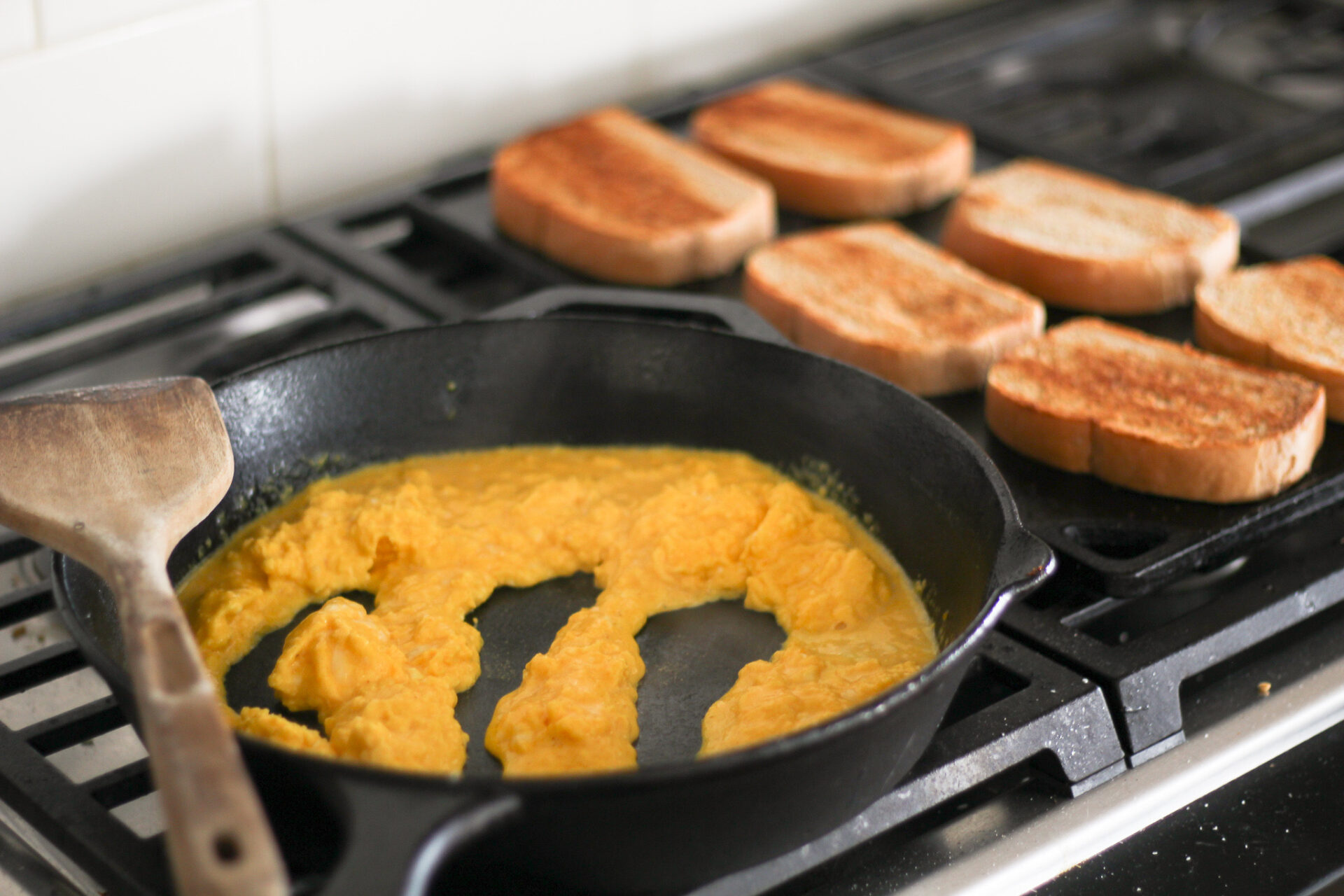
After several coats, check the skillet surface. It should feel smooth and slightly shiny. A rough or sticky surface means more layers are needed.
If the finish flakes or peels, the layers may be too thick or not fully cured. In that case, strip the skillet and start again with thin coats.
Credit: hopewellheightsblog.com
Maintenance Tips
Keeping your cast iron skillet in top shape takes regular care. Proper maintenance improves its non-stick surface and lifespan.
Using flaxseed oil for seasoning adds a strong, durable coating. Follow these tips to keep your skillet ready for cooking.
Cleaning After Use
Clean your skillet right after cooking to avoid stuck-on food. Avoid soap and harsh scrubbing that can strip the seasoning.
- Rinse with hot water and use a soft brush or sponge
- Dry the skillet completely with a towel or on low heat
- Apply a thin layer of flaxseed oil to protect the surface
Re-seasoning Frequency
Re-season your skillet to maintain its protective layer. The frequency depends on how often you cook and clean it.
| Usage Level | Re-seasoning Frequency |
| Daily use | Every 1-2 months |
| Weekly use | Every 3-4 months |
| Occasional use | Twice a year |
Avoiding Damage
Protect your skillet by avoiding certain mistakes. This keeps the seasoning strong and the skillet safe.
- Do not soak the skillet in water for long periods
- Avoid cooking acidic foods frequently as they can wear the seasoning
- Do not use metal utensils that can scratch the surface
- Store the skillet in a dry place to prevent rust
Common Mistakes To Avoid
Seasoning a cast iron skillet with flaxseed oil needs care. Many people make simple mistakes. These errors can ruin your skillet’s seasoning.
Knowing what to avoid helps you get a smooth, long-lasting finish. Here are some common mistakes to watch out for.
Using Too Much Oil
Applying too much flaxseed oil leaves a sticky layer on your skillet. This sticky coating can peel off during cooking. It also makes the surface uneven and hard to clean.
- Use only a thin, even layer of oil.
- Wipe off any excess oil with a paper towel.
- Too much oil causes a gummy finish.
Insufficient Heating
Heat is key to curing flaxseed oil on your skillet. If the skillet is not hot enough, the oil will not polymerize properly. This leads to a weak, patchy seasoning.
| Heating Temperature | Effect on Seasoning |
| Below 400°F (204°C) | Oil stays sticky, poor coating |
| 400°F to 450°F (204°C-232°C) | Good polymerization, smooth finish |
| Above 500°F (260°C) | Risk of burning oil, uneven seasoning |
Ignoring Rust
Rust weakens the skillet surface and stops oil from bonding well. Skipping rust removal causes rough patches and poor seasoning.
To avoid rust problems:
- Scrub rust with steel wool or a wire brush.
- Wash and dry the skillet completely before seasoning.
- Apply oil right after cleaning to prevent new rust.
Credit: hopewellheightsblog.com
Frequently Asked Questions
What Is The Best Flaxseed Oil For Seasoning Cast Iron?
Choose 100% pure, cold-pressed flaxseed oil for seasoning. It polymerizes well, creating a durable, non-stick surface on your skillet.
How Often Should I Season My Cast Iron Skillet?
Season your skillet after 3-4 uses or when food starts sticking. Regular seasoning maintains its non-stick and rust-resistant properties.
Can I Use Flaxseed Oil Instead Of Vegetable Oil?
Yes, flaxseed oil is preferred for its drying properties. It forms a harder, longer-lasting seasoning layer compared to vegetable oil.
How Long Does Seasoning With Flaxseed Oil Take?
Seasoning with flaxseed oil requires about 1 hour per coat at 450°F. Multiple thin coats improve durability and non-stick quality.
Conclusion
Seasoning a cast iron skillet with flaxseed oil is simple. It enhances durability and cooking performance. Regular seasoning prevents rust and maintains a non-stick surface. Ensure the skillet is clean and dry before applying oil. Bake it in the oven for best results.
Repeat the process occasionally for lasting benefits. A well-seasoned skillet improves your cooking experience. Enjoy healthier meals with less oil. Your cast iron will thank you for the care. Happy cooking with your trusted skillet!