Are your stainless steel baking pans looking less than their shiny best? If you’ve noticed a build-up of grime or stubborn stains that just won’t budge, you’re not alone.
These kitchen essentials can easily lose their luster after countless delicious meals. But don’t worry—restoring them to their gleaming glory is easier than you might think. In this guide, you’ll discover simple yet effective techniques to make your baking pans sparkle like new.
Imagine the satisfaction of pulling out a pan so clean it could double as a mirror. Stick around, because you’re about to learn the secrets that will transform your pans—and your cooking experience. Ready to make your kitchen shine? Let’s get started!

Credit: www.reddit.com
Choosing The Right Cleaner
Cleaning stainless steel baking pans needs the right cleaner. The cleaner must be gentle to avoid damage.
Using the correct cleaner helps keep your pans shiny and lasting longer.
Mild Detergents
Mild dish soaps work well for regular cleaning. They remove grease without hurting the steel.
Use warm water and a soft sponge with the detergent. Avoid harsh scrubbing to protect the pan’s surface.
Baking Soda And Vinegar
Baking soda and vinegar make a natural cleaner. They help remove tough stains and burnt food.
Sprinkle baking soda on the pan, then add vinegar. Let it fizz for a few minutes before scrubbing gently.
- Baking soda softens stuck food
- Vinegar breaks down grease and stains
- Both are safe for stainless steel
Commercial Stainless Steel Cleaners
Special cleaners made for stainless steel clean deeply. They remove stains and restore shine.
Follow the instructions on the cleaner’s label. Test on a small area first to avoid damage.
Prepping The Pan
Cleaning stainless steel baking pans starts with proper preparation. Removing loose dirt and soaking tough stains helps get your pan ready for a deep clean.
These simple steps make cleaning easier and protect your pan’s surface from damage.
Removing Loose Debris
Before washing, remove crumbs and food bits from the pan. This prevents scratching and helps the cleaning solution work better.
- Use a soft brush or sponge to sweep off loose debris.
- Tap the pan gently over a trash bin to dislodge stuck crumbs.
- Wipe with a dry cloth to clear any remaining particles.
Soaking For Stubborn Stains
Soaking helps loosen baked-on food and stains. Use warm water with a mild detergent or baking soda for best results.
| Soaking Method | Instructions |
| Warm Water & Soap | Fill pan with warm water and add dish soap. Let sit 15–30 minutes. |
| Baking Soda Paste | Mix baking soda with water to make paste. Apply to stains and soak for 30 minutes. |
| Vinegar Soak | Fill pan with equal parts water and white vinegar. Soak 20 minutes for tough grime. |
Cleaning Techniques
Stainless steel baking pans need proper care to last long. Cleaning them correctly keeps them shiny and safe for food.
This guide explains easy ways to clean your pans without damage. Use simple methods to remove stains and grease.
Hand Washing Tips
Always wash your stainless steel pans by hand. Use warm water and mild dish soap to clean gently.
- Fill the sink with warm soapy water
- Soak the pan for a few minutes if food is stuck
- Use a soft cloth or sponge to wipe the surface
- Rinse well with clean water
- Dry the pan with a soft towel to prevent water spots
Using Gentle Scrubbers
Gentle scrubbers remove food without scratching the pan. Soft sponges and nylon scrubbers work well on stainless steel.
| Scrubber Type | Best For |
| Soft Sponge | Light grease and food residue |
| Nylon Scrubber | Stubborn spots without scratching |
| Microfiber Cloth | Polishing and drying |
Avoiding Abrasive Tools
Do not use metal scrubbers or steel wool. These tools can scratch and damage the pan’s surface.
Here are tools to avoid:
- Steel wool pads
- Metal scouring pads
- Harsh abrasive powders
Using these can cause permanent marks and reduce the pan’s lifespan.
Tackling Tough Stains
Stainless steel baking pans can get dirty after many uses. Tough stains need special care to clean well.
Here are simple ways to remove burnt food and fix discoloration on your pans.
Burnt-on Food Removal
Burnt food sticks hard to pans. Use these tips to clean it safely without damage.
- Soak the pan in hot water with a few drops of dish soap for 30 minutes.
- Make a paste from baking soda and water. Apply it on the burnt spots.
- Let the paste sit for 15 minutes, then scrub gently with a soft sponge.
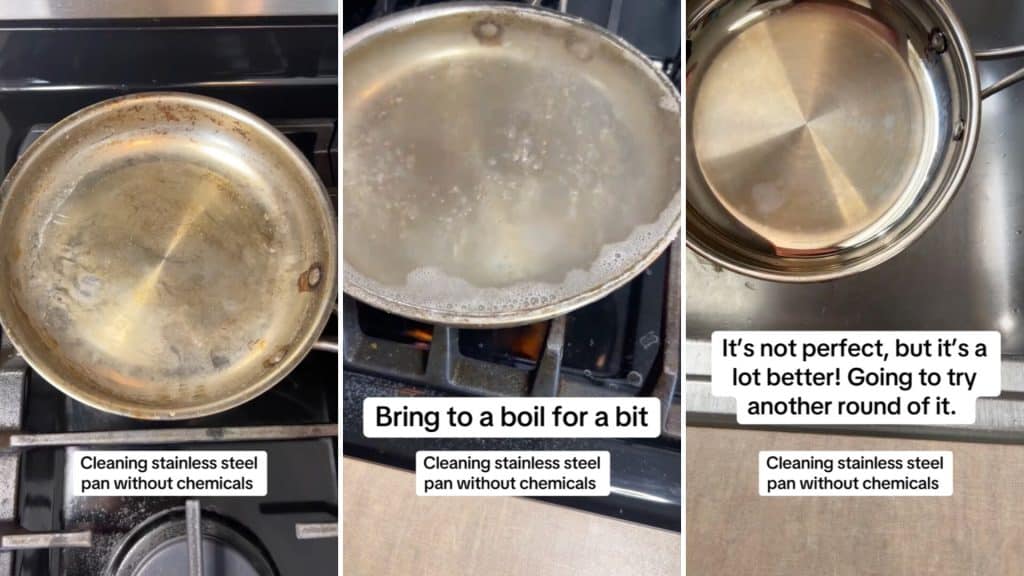
- For tough stains, boil water with vinegar in the pan for 10 minutes.
- Rinse the pan well and dry with a soft cloth to avoid water spots.
Dealing With Discoloration
Discoloration can make pans look old. Use safe methods to restore their shine.
| Discoloration Type | Cause | Cleaning Method |
| Rainbow Tint | Heat exposure | Rub with white vinegar and rinse |
| Brown or Blue Stains | Overheating | Use baking soda paste and scrub gently |
| Water Spots | Mineral deposits | Wipe with lemon juice and dry well |
Drying And Maintenance
Stainless steel baking pans need good care to stay shiny and last long. Drying and maintenance are key parts of cleaning.
Proper drying stops water marks and rust. Regular care keeps the pans in top shape.
Proper Drying Methods
After washing, dry your pans right away. Air drying can leave spots and stains on the steel.
Use a soft towel to wipe the pan dry. Avoid rough cloths that can scratch the surface.
- Use a clean, soft microfiber cloth
- Pat dry instead of rubbing hard
- Dry all parts, including corners and edges
Preventing Water Spots
Water spots happen when minerals in water dry on the pan. These spots look dull and can be hard to remove.
Use filtered or distilled water for the final rinse. This reduces mineral deposits on the pan.
- Dry pans immediately after washing
- Use a vinegar-water mix to wipe spots away
- Store pans in a dry place
Regular Care Tips
Clean your pans often to avoid buildup. Avoid harsh cleaners that can damage the surface.
Use baking soda or mild soap for regular cleaning. Polish pans with a soft cloth to keep them shiny.
- Wash pans soon after use
- Use gentle scrubbers like sponges
- Store pans dry and separated
- Polish with a soft cloth regularly

Credit: oakabode.com
When To Replace Your Pan
Stainless steel baking pans last a long time if cared for properly. Still, some signs mean it is time to get a new pan.
Knowing when to replace your pan helps keep your food safe and tasting good.
Signs Of Damage
Check your pan often for damage. Some damage can affect how well it cooks and its safety.
- Deep scratches or gouges on the surface
- Warped or bent shape that makes it unstable
- Rust spots that do not come off with cleaning
- Peeling or flaking coating, if your pan has one
- Cracks or holes in the metal
Safety Considerations
Using a damaged pan can cause food safety risks. It can also cause burns or cuts.
| Risk | Reason |
| Food contamination | Rust and peeling can mix with food |
| Uneven cooking | Warped pans do not heat evenly |
| Injury | Sharp edges or cracks can cut skin |
| Fire hazard | Damaged pans may cause overheating |

Credit: www.reddit.com
Frequently Asked Questions
How Do I Remove Burnt Food From Stainless Steel Pans?
Soak the pan in warm, soapy water for 30 minutes. Use a non-abrasive scrubber to gently remove burnt food. For tough stains, sprinkle baking soda and scrub lightly. Rinse thoroughly and dry with a clean cloth to avoid water spots.
Can I Use Vinegar To Clean Stainless Steel Baking Pans?
Yes, vinegar is effective for cleaning stainless steel pans. Mix equal parts water and white vinegar. Wipe the pan with this solution to remove stains and odors. Rinse well afterward and dry to maintain shine and prevent residue buildup.
What’s The Best Way To Prevent Stains On Stainless Steel Pans?
Avoid overheating and immediate cooling of pans. Clean pans promptly after use to prevent residue buildup. Use mild detergents and soft sponges. Regularly polish with a stainless steel cleaner to maintain their shine and prevent stains.
Is It Safe To Use Steel Wool On Stainless Steel Pans?
Steel wool can scratch stainless steel surfaces, so it’s not recommended. Instead, use non-abrasive scrubbers or nylon pads to clean. For stubborn stains, use baking soda or vinegar solutions to avoid damaging the pan’s finish.
Conclusion
Cleaning stainless steel baking pans does not have to be hard. Use warm water, soap, and a soft sponge for best results. For tough stains, baking soda and vinegar work well. Avoid steel wool to keep pans smooth and shiny.
Dry pans completely to stop rust and spots. Regular care keeps your pans looking new longer. Enjoy baking with clean, shiny pans every time. Simple steps make a big difference in your kitchen.