Have you ever wanted to enjoy fresh, homemade bread without the hassle of kneading? No knead bread has become a favorite for many because it’s simple and requires minimal effort.
But what if you want a loaf that fits perfectly on your sandwich plate or toaster? Can you bake no knead bread in a loaf pan? If you’re curious about how to get that perfect shape without losing the delicious crust and texture, you’re in the right place.
Keep reading to discover the secrets to baking no knead bread in a loaf pan that will make your kitchen smell amazing and your taste buds happy.
Benefits Of No Knead Bread
No knead bread is a simple way to bake fresh bread at home. It needs very little effort but gives great results.
You can bake no knead bread in a loaf pan. This method is easy and works well for making shaped bread.
Simple Preparation
No knead bread uses fewer steps than traditional bread recipes. You just mix ingredients and let the dough rest.
This means no long kneading sessions. Anyone can prepare the dough with little baking experience.
Time-saving Process
The dough rests for a long time instead of being kneaded. This saves active work time in the kitchen.
You can do other tasks while the dough rises slowly. Baking in a loaf pan keeps the shape and makes baking easier.
Rustic Texture And Flavor
No knead bread has a chewy crust and soft inside. The slow rise helps develop rich flavors.
Baking in a loaf pan creates a nice shape but keeps the bread's rustic feel and taste.

Credit: wildwildwhisk.com
Using A Loaf Pan For No Knead Bread
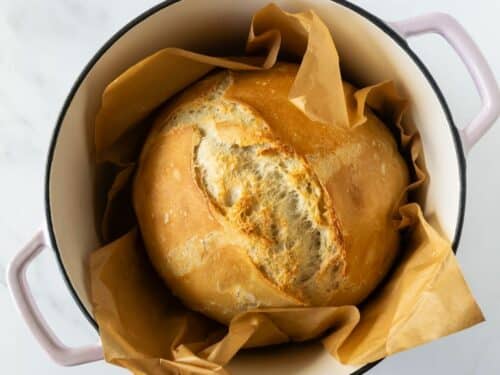
No knead bread usually bakes in a Dutch oven. You can also bake it in a loaf pan. This changes the shape and texture of the bread.
Using a loaf pan is easy and works well if you want sandwich-style bread. It also fits well in smaller ovens.
Differences From Dutch Oven Baking
A Dutch oven traps steam well. This helps create a crispy crust on no knead bread. A loaf pan does not trap steam the same way.
Loaf pans shape the bread into a tall, rectangular form. Dutch ovens let the bread spread out more and rise freely.
- Loaf pans produce softer crusts than Dutch ovens.
- Dutch ovens create rounder, rustic loaves.
- Loaf pans are better for uniform slices.
Choosing The Right Pan Size
Pick a pan size that fits your dough volume. Too small a pan will cause overflow. Too large a pan makes flat bread.
Common loaf pan sizes are 8x4 inches or 9x5 inches. These work well for most no knead bread recipes.
- Use 8x4 inch pan for smaller batches.
- Use 9x5 inch pan for larger dough amounts.
- Check pan depth; 2.5 to 3 inches is ideal.
Pan Material Considerations
Metal pans heat up quickly and make a crisp crust. Glass pans heat slower and may give softer crusts.
Non-stick pans are easy to clean but may brown bread less. Avoid very thin pans that heat unevenly.
- Metal pans give better heat for crust.
- Glass pans allow you to see the bread bake.
- Non-stick pans prevent sticking but may affect browning.
- Heavy pans hold heat better for even baking.
Step-by-step Baking In A Loaf Pan
Baking no knead bread in a loaf pan is simple and gives a nice shape. This method works well for beginners and makes slicing easier.
You will learn how to prepare the dough, proof it in the pan, and bake at the right temperature and time.
Preparing The Dough
Start by mixing flour, water, salt, and yeast in a large bowl. Stir until combined. The dough will be sticky and wet.
Cover the bowl with plastic wrap or a towel. Let it rest at room temperature for 12 to 18 hours. This long rest allows the dough to rise slowly.
Proofing In The Pan
After the dough has risen, gently scrape it onto a floured surface. Fold it a few times to shape it into a loaf.
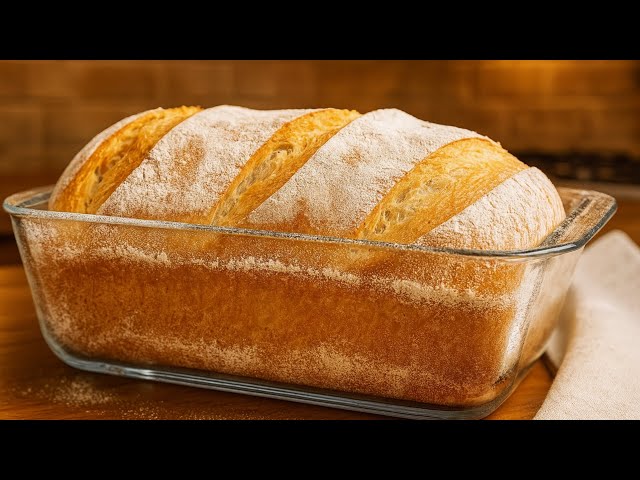
Place the shaped dough into a greased loaf pan. Cover it loosely with a towel or plastic wrap. Let it rise again for 1 to 2 hours until it almost doubles in size.
Baking Temperature And Time
Preheat your oven to 425°F (220°C). Place the loaf pan in the oven and bake for 30 to 40 minutes.
The bread is done when the crust is golden brown. You can check by tapping the bottom of the loaf; it should sound hollow.
Credit: runlifteatrepeat.com
Tips For Perfect Loaf Pan Bread
Baking no knead bread in a loaf pan can create a neat shape. It is easy and gives a soft inside with a crisp outside. Small changes help make the bread better.
Here are tips to get the best bread from your loaf pan. These help with sticking, crust, and dough texture.
Preventing Sticking
Sticking is a common problem when baking bread in a pan. You can stop this by preparing the pan well. Use oil, butter, or non-stick spray to coat the pan.
Another way is to line the pan with parchment paper. This makes it easy to remove the bread after baking without breaking it.
- Grease the pan with oil or butter evenly
- Use parchment paper for easy removal
- Lightly dust the pan with flour or cornmeal
- Let the bread cool before removing it
Achieving A Crispy Crust
A crispy crust adds great texture to no knead bread. Bake the bread at a high temperature to get a crunchy crust. You can also use steam during the first part of baking.
Spray water inside the oven or place a pan with water at the bottom. This helps create steam and makes the crust crispy and shiny.
- Bake at 425°F (220°C) for a crunchy crust
- Add steam by spraying water in the oven
- Use a hot baking stone or cast iron pan
- Remove steam in the last 10 minutes for browning
Adjusting Hydration Levels
Hydration means how much water you use in your dough. Higher hydration makes a soft, open crumb but can be sticky. Lower hydration makes dough easier to handle and denser bread.
Adjust water based on your flour and climate. Start with the recipe’s amount and add more if dough feels too dry. Less water helps if dough spreads too much in the pan.
- Start with 70% hydration (water to flour ratio)
- Add water slowly if dough feels dry or stiff
- Reduce water if dough is too sticky or flat
- Use a scale for accurate measurements
Common Challenges And Fixes
Baking no-knead bread in a loaf pan can be tricky. You might face problems like dense texture, uneven baking, or soft crust.
Understanding these issues helps improve your baking. Here are common challenges and how to fix them.
Dense Texture Issues
No-knead bread can turn dense if the dough is too wet or under-risen. Using a loaf pan changes how the bread rises and bakes.
- Use the right amount of water. Too much makes the dough heavy.
- Let the dough rise until it doubles in size. Short rising makes bread dense.
- Check your yeast. Old yeast slows rising.
- Avoid overfilling the loaf pan. Leave space for the dough to expand.
Uneven Baking
Uneven baking causes some parts of the bread to be undercooked while others burn. Loaf pans affect heat distribution.
| Cause | Fix |
| Oven hot spots | Rotate the pan halfway through baking |
| Pan too thick or dark | Use a light-colored metal pan |
| Dough not spread evenly | Spread dough evenly in the pan before baking |
| Baking temperature too high | Lower oven temperature by 25°F (15°C) |
Crust Softness
No-knead bread in loaf pans can have a soft crust instead of a crunchy one. This happens because of moisture trapped in the pan.
- Bake the bread uncovered to let steam escape.
- Remove bread from the pan right after baking.
- Place the loaf on a wire rack to cool fully.
- Try preheating the pan before adding dough for a better crust.
Variations To Try In Loaf Pan
Baking no knead bread in a loaf pan lets you create different flavors and textures. You can add ingredients to make each loaf unique.
These variations work well with the simple no knead recipe. Try adding seeds, herbs, or sweet elements for tasty results.
Adding Seeds And Nuts
Seeds and nuts add crunch and nutrition to your bread. Mix them into the dough before baking for even flavor.
Popular choices include sunflower seeds, sesame seeds, and chopped walnuts. They give the bread a nice texture.
- Sunflower seeds add a mild nutty taste
- Sesame seeds give a toasty flavor
- Chopped walnuts add crunch and richness
- Poppy seeds bring a subtle crunch
- Flaxseeds provide extra fiber and omega-3
Incorporating Herbs And Spices
Herbs and spices bring fresh and warm notes to your bread. Add dried or fresh herbs to the dough before baking.
Try rosemary, thyme, or garlic powder for savory bread. Spices like cinnamon or nutmeg work well for sweeter versions.
- Rosemary adds a piney, fresh flavor
- Thyme gives a gentle earthiness
- Garlic powder adds savory depth
- Cinnamon offers warmth and sweetness
- Nutmeg gives a spicy, sweet aroma
Sweet And Savory Twists
You can make no knead bread sweeter or more savory by adding extra ingredients. Mix them into the dough before baking in the loaf pan.
Try adding olives and cheese for a savory loaf. For sweet bread, add raisins or honey for extra flavor.
- Chopped olives and shredded cheese for savory taste
- Sun-dried tomatoes add tangy flavor
- Raisins or dried cranberries for natural sweetness
- Honey or maple syrup adds gentle sweetness
- Chopped nuts with cinnamon for sweet bread
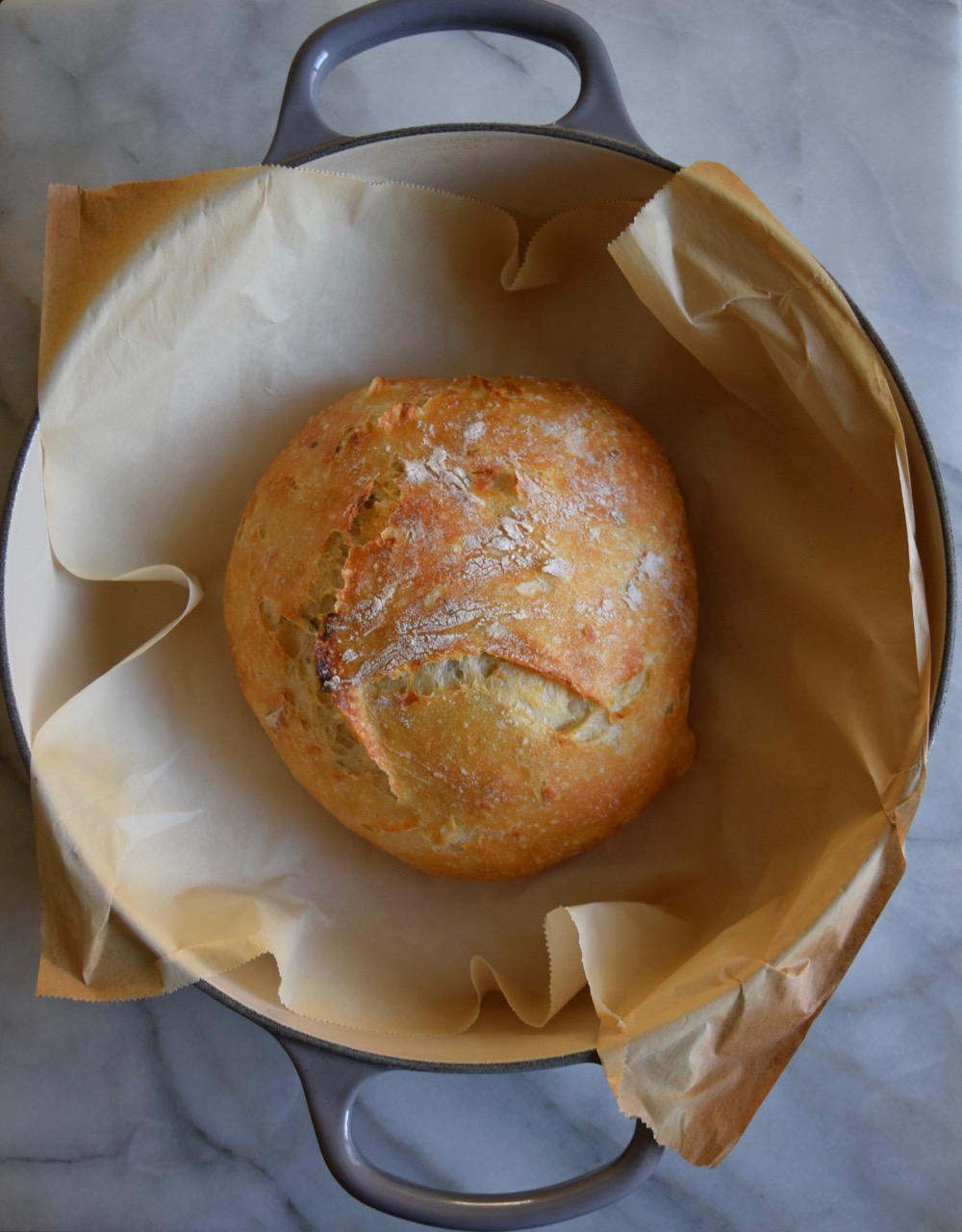
Credit: glorifiedhobby.com
Frequently Asked Questions
Can No Knead Bread Be Baked In A Loaf Pan?
Yes, no knead bread can be baked in a loaf pan. It helps shape the bread evenly. The pan also creates a soft crust compared to baking on a stone or Dutch oven. Ensure proper greasing to prevent sticking.
How Does A Loaf Pan Affect No Knead Bread Texture?
A loaf pan creates a softer crust and uniform shape. It restricts dough expansion, resulting in a denser crumb. This method suits those preferring sandwich-style bread. For a crustier loaf, baking on a stone or Dutch oven is better.
Should I Adjust Baking Time For Loaf Pan No Knead Bread?
Yes, baking time may need slight adjustment when using a loaf pan. Loaf pans conduct heat differently than Dutch ovens. Check bread doneness 5 to 10 minutes earlier. Use a thermometer; bread is done at 190-210°F internal temperature.
Can I Use Any Loaf Pan For No Knead Bread?
Most metal or glass loaf pans work well for no knead bread. Avoid very thin or nonstick pans that may affect heat distribution. Standard 8x4 or 9x5 inch pans are ideal for even baking and proper loaf size.
Conclusion
Baking no knead bread in a loaf pan is easy. It gives the bread a nice shape. The crust stays crispy and the inside soft. Perfect for sandwiches or toast. No special skills needed. Just mix, let it rise, and bake.
Anyone can do it. Try it at home and enjoy fresh bread. It's a rewarding experience. Ideal for beginners and seasoned bakers alike. Enjoy the aroma of homemade bread in your kitchen. You might find it becomes a family favorite.
Give it a go and taste the difference.