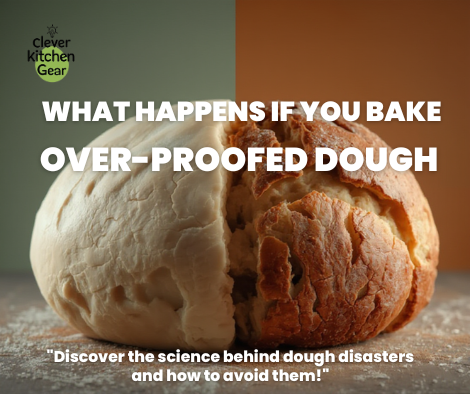
Have you ever taken a peek at your bread dough only to realize it’s over proofed? That sinking feeling hits hard—will your hard work go to waste?
The good news is, you might still save your bread and turn it into something delicious. If you’ve been wondering, “Can you still bake over proofed bread? ” you’re in the right place. Keep reading, because understanding a few simple tricks can help you rescue your dough and enjoy fresh bread without starting over.
Let’s dive into how you can make the most of your over proofed bread.
Signs Of Over Proofed Bread
Over proofed bread dough rises too much before baking. This affects the bread's quality.
Knowing the signs helps you decide if you can still bake the bread or need to start over.
Visual Indicators
Over proofed dough looks very puffy and may have large air bubbles on the surface. It often looks loose and may collapse easily.
- Dough has expanded beyond its normal size
- Surface appears wrinkled or sunken
- Large, uneven holes visible on the dough
- Dough feels overly soft and fragile
Texture And Smell Changes
The texture of over proofed bread is usually dense or gummy after baking. The smell may be sour or slightly alcoholic because of fermentation.
| Change | What It Means |
|---|---|
| Sticky or gummy crumb | Too much fermentation, affecting texture |
| Sour or sharp smell | Yeast has produced excess acids |
| Dense or flat bread | Dough lost gas, causing poor rise |

Credit: www.reddit.com
Why Over Proofing Happens
Over proofing bread occurs when dough rises too much before baking. This affects the texture and shape of the bread.
Understanding the causes helps bakers avoid this issue and improve their baking results.
Role Of Yeast And Time
Yeast causes the dough to rise by producing gas. If dough sits too long, yeast keeps working and creates too much gas.
- Too much yeast speeds up rising.
- Long proofing time lets gas build up excessively.
- Weak gluten can’t hold the gas well, causing collapse.
- Rising dough may lose its shape if left too long.
Environmental Factors
Temperature and humidity affect how fast yeast works. Warmer and moist environments cause quicker rises.
| Factor | Effect on Proofing |
| High Temperature | Speeds up yeast activity |
| Low Temperature | Slows down yeast activity |
| High Humidity | Makes dough softer and rise faster |
| Low Humidity | Slows dough rise and dries surface |
Can You Salvage Over Proofed Dough?
Over proofed dough is a common baking problem. It happens when the dough rises too much and then collapses. This can affect the bread's texture and taste.
Many bakers wonder if over proofed dough can still be baked. The good news is you can often save it with some care and attention.
Assessing Dough Condition
Check the dough carefully before deciding what to do. Look at its texture, smell, and feel. This helps you understand how far the dough has gone.
- If the dough is very soft and sticky, it may be over proofed.
- A sour or alcohol smell can mean the dough has fermented too long.
- If the dough has collapsed or looks flat, it lost its gas structure.
- Touch the dough gently. If it does not bounce back, it is very over proofed.
Techniques To Rescue Dough
You can try a few methods to save over proofed dough. These steps help restore some strength and allow baking.
- Gently punch down the dough to remove excess air.
- Shape the dough back into a tight ball or loaf.
- Let it rest for 20 to 30 minutes to regain some elasticity.
- Preheat the oven well to ensure good oven spring.
- Bake the dough as usual but expect a denser crumb.

Credit: www.reddit.com
Baking Tips For Over Proofed Bread
Over proofed bread can be tricky, but you can still bake it well. Adjusting your baking method helps save the loaf.
Small changes in time, temperature, and steam use improve the bread’s texture and crust. These tips make a difference.
Adjusting Baking Time And Temperature
Lowering the oven temperature helps bake over proofed bread evenly. This prevents the crust from burning before the inside cooks.
- Preheat oven to 375°F (190°C) instead of higher heat.
- Bake the bread for a longer time, about 10-15 minutes more.
- Check the bread's internal temperature; it should reach 190-210°F (88-99°C).
- Use a thermometer to avoid over or under baking.
Using Steam For Better Crust
Steam helps form a crisp and shiny crust on over proofed bread. It delays crust hardening, allowing better oven spring.
| Method | Description |
|---|---|
| Water Pan | Place a pan of hot water in the oven bottom during the first 10 minutes of baking. |
| Spray Bottle | Spray water inside the oven walls before and after placing the bread. |
| Cover with Lid | Bake bread in a covered Dutch oven to trap steam naturally. |
Preventing Over Proofing In Future Bakes
Over proofing bread dough can ruin its texture and taste. It makes the dough too soft and hard to bake properly.
Learning how to prevent over proofing helps you bake bread that is light and fluffy every time.
Timing Your Proofs
Keep track of how long your dough proofs. Proofing time depends on the recipe and room temperature.
Check the dough often to avoid letting it rise too long. Use the finger poke test to see if it is ready.
- Set a timer based on recipe instructions
- Perform the finger poke test: dough should slowly bounce back
- Shorten proofing time if your kitchen is warm
- Note that colder dough takes longer to proof
Controlling Proofing Environment
The temperature and humidity where your dough proofs affect how fast it rises. Keep these consistent.
Use a warm but not hot place for proofing. Avoid direct sunlight and drafts that dry the dough.
- Keep proofing area around 75°F (24°C) for best results
- Cover dough with a damp cloth to keep moisture
- Try proofing in the oven with the light on for gentle warmth
- Use a proofing box or cooler to control temperature
Alternative Uses For Over Proofed Dough
Over proofed dough may not bake well as traditional bread. It can collapse or become dense. Still, you can use it in other ways to avoid waste.
This guide explores easy ideas to turn over proofed dough into tasty dishes. Try these simple recipes to save your dough.
Flatbreads And Pizza Bases
Over proofed dough works well for flatbreads and pizza bases. It may not rise as much but still bakes into a soft, chewy crust. These dishes are forgiving and tasty.
- Roll the dough thin to avoid sogginess.
- Add toppings like tomato sauce, cheese, and vegetables.
- Bake at a high temperature for a crisp crust.
- Brush with olive oil and herbs before baking for extra flavor.
- Use as a quick snack or meal base.
Bread Puddings And Croutons
Use over proofed dough to make bread puddings or croutons. These options work well even if the dough texture is less ideal for bread.
| Use | Method | Tip |
| Bread Pudding | Cut dough into pieces, soak in egg and milk mix, bake until set | Add cinnamon or vanilla for sweetness |
| Croutons | Cube dough, toss with oil and herbs, bake until crispy | Use as salad or soup topping |

Credit: www.reddit.com
Frequently Asked Questions
Can You Bake Bread After It Is Over Proofed?
Yes, you can bake over proofed bread. However, it may have a denser texture and less rise. Adjust baking time slightly to prevent burning. Over proofed dough often results in a less flavorful loaf but is still edible.
How Does Over Proofing Affect Bread Baking?
Over proofing causes the dough to collapse and lose gas. This results in a flat, dense loaf with poor texture. The flavor may become overly yeasty or sour. Baking is still possible but the bread quality declines.
Can Over Proofed Bread Be Salvaged?
You can salvage over proofed bread by gently reshaping and giving it a short second proof. Avoid aggressive handling to maintain gas. Bake immediately after the brief proof to improve texture and rise slightly.
What Are Signs Of Over Proofed Dough Before Baking?
Over proofed dough appears very bubbly, sticky, and may collapse when touched. It often smells strongly of yeast. It feels loose and lacks elasticity. Identifying these signs helps decide if reshaping or immediate baking is needed.
Conclusion
Baking over-proofed bread can still yield tasty results. It may not rise as expected, but don't worry. The texture might be dense or chewy. These breads still make great toast or croutons. Experimenting with over-proofed dough can be fun. Each loaf offers unique surprises.
Try adding flavors or toppings. Be creative with your baking. Mistakes can lead to delicious discoveries. Over-proofed bread teaches patience and adaptability. So, next time, embrace the unexpected. Your kitchen is a place for learning. Enjoy the process and savor the results.
Happy baking!