Your cutting board is one of the most used tools in your kitchen. But did you know that keeping it well-oiled can make it last longer and stay cleaner?
If you want to protect your cutting board from cracks, stains, and bacteria, learning how to oil it properly is a simple yet powerful step. You’ll discover easy tips to keep your cutting board looking new and working great. Ready to give your board the care it deserves?
Let’s dive in!

Credit: www.youtube.com
Choosing The Right Oil
Oiling your cutting board keeps it strong and stops cracks. Picking the right oil is key for safety and care.
Some oils protect wood well, but others can spoil or harm your board. Use safe oils made for kitchen use.
Food-safe Oils To Use
Choose oils that do not go bad or smell over time. These oils soak into the wood and keep it smooth.
- Mineral oil: It is clear, odorless, and safe for food contact.
- Coconut oil (refined): It resists going rancid and protects wood.
- Walnut oil: Natural and good for wood, but watch for nut allergies.
- Beeswax mixed with mineral oil: Adds extra protection and shine.
Oils To Avoid
Avoid oils that can spoil or leave sticky residue. These can make your board unsafe or sticky.
- Vegetable oils like olive, canola, or sunflower: They can go rancid and smell bad.
- Animal fats such as lard or butter: These spoil quickly and attract bacteria.
- Essential oils: Not meant for wood care and can be harmful.
- Polymerized oils like linseed or tung oil without food-safe labels: They may not be safe for cutting boards.
Preparing The Cutting Board
Oiling a cutting board keeps the wood healthy and prevents cracks. Preparing the board before oiling is important for the best results.
Start by cleaning and drying the board properly. This helps the oil soak in evenly and protects the wood.
Cleaning Before Oiling
Remove all food residues and stains before you apply oil. Use mild soap and warm water to clean the surface.
- Scrub the board gently with a sponge or soft brush.
- Rinse with warm water to remove soap and dirt.
- Do not soak the board to avoid swelling or damage.
- Use a mixture of vinegar and water for extra cleaning power.
Drying The Surface
Dry the cutting board completely before oiling. Moisture blocks the oil from soaking in well.
| Drying Method | Details |
| Towel Dry | Wipe with a clean cloth to remove water. |
| Air Dry | Stand the board upright for 1-2 hours. |
| Sun Dry | Place in sunlight for 30 minutes if possible. |
Applying The Oil
Oiling a cutting board keeps it strong and safe for food. It stops the wood from drying out and cracking.
Applying oil is easy if you have the right tools and follow simple steps. This guide will help you do it right.
Tools You’ll Need
Use clean and soft tools to apply oil evenly. This helps the oil soak into the wood well.
- Food-safe mineral oil or cutting board oil
- Clean, dry cloth or paper towels
- Small bowl or container for oil
- Gloves (optional, to keep hands clean)
Step-by-step Application
Start with a clean, dry cutting board. Dirt or water can stop the oil from soaking in well.
- Pour a small amount of oil into a bowl.
- Dip the cloth or paper towel into the oil.
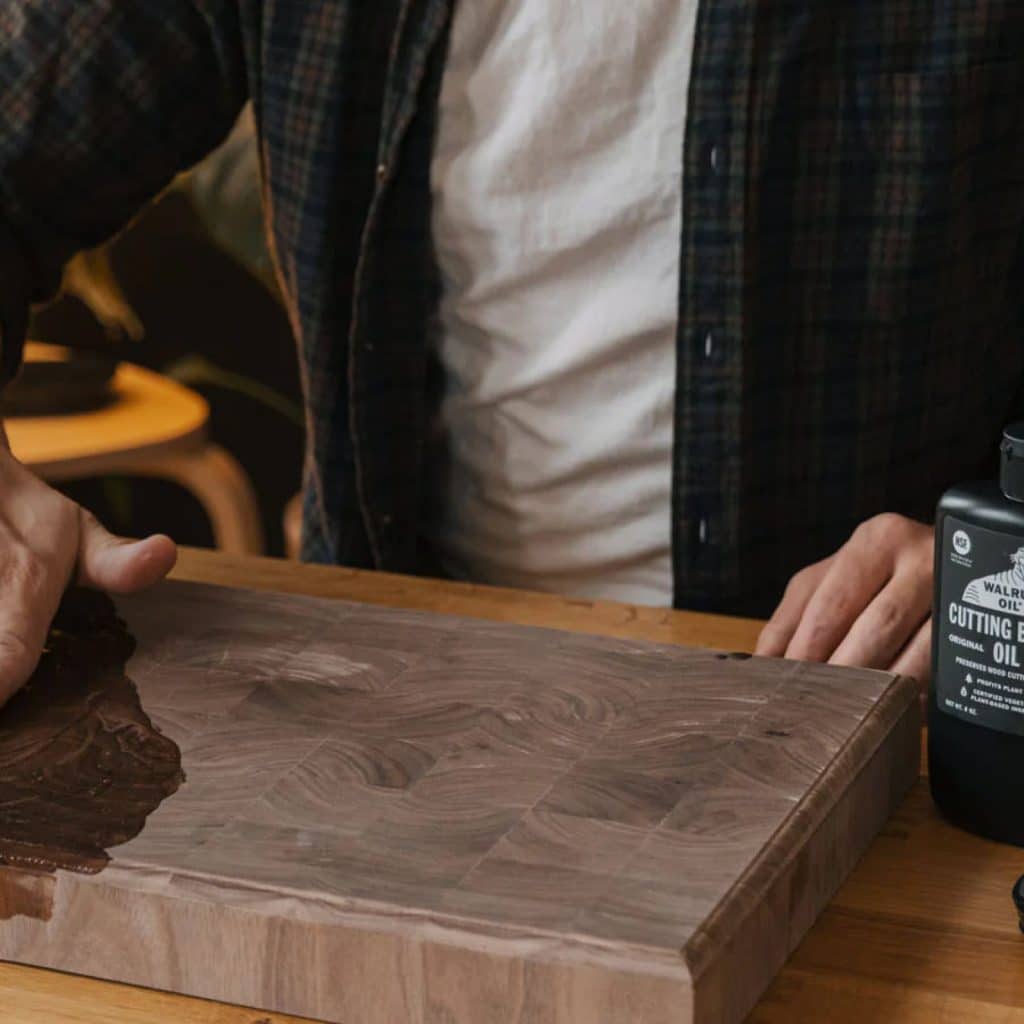
- Rub the oil onto the cutting board using circular motions.
- Cover all sides and edges of the board.
- Let the oil soak in for at least 20 minutes.
- Wipe off any extra oil with a dry cloth.
- Let the board dry before using or storing it.
How Much Oil To Use
Using the right amount of oil keeps the board protected without making it sticky or oily.
- Start with about one tablespoon of oil for a medium board.
- Add more oil if the wood absorbs it quickly.
- Do not soak the board; a thin, even layer is best.
- Less oil can leave dry spots; more oil can create stickiness.

Credit: ca.maisonrodin.com
Allowing The Oil To Soak
Oiling a cutting board helps protect it from moisture and cracks. Letting the oil soak in is very important. This step keeps the board in good shape for a long time.
Patience is key. If you rush this, the oil will just sit on the surface. Proper soaking means the wood absorbs the oil deeply. This protects the board better.
Optimal Soaking Time
Let the oil soak for enough time to fully penetrate the wood. Too little time means weak protection. Too long may leave the board sticky.
- Apply a thin, even coat of oil over the whole board.
- Leave the board flat in a warm, dry place.
- Wait at least 4 hours to let the oil soak in.
- If the board looks dry, apply another coat and wait again.
- For best results, soak overnight before first use.
Signs The Board Is Ready
Knowing when your cutting board has soaked enough oil is easy. Look for these signs to start using it safely.
| Sign | Description |
|---|---|
| Matte Finish | The board looks smooth, not shiny or sticky. |
| Dry to Touch | The surface feels dry, not oily or wet. |
| Water Beads | Water drops stay on top without soaking in immediately. |
| Even Color | The wood has a rich, consistent tone from the oil. |
Removing Excess Oil
After applying oil to your cutting board, removing the extra oil is important. This prevents a greasy surface that can attract dust and dirt.
Proper removal keeps your board smooth and ready for use. It also helps the oil soak in evenly.
Wiping Techniques
Use a clean, soft cloth to wipe off excess oil. A lint-free cotton cloth works best. Wipe in the direction of the wood grain to avoid scratching.
- Apply gentle pressure while wiping
- Use circular motions for better coverage
- Flip the cloth regularly to avoid spreading oil back
- Wipe until the board feels just slightly damp, not wet
Avoiding Sticky Residue
Sticky residue can form if too much oil stays on the surface. To stop this, wipe the board carefully and let it dry properly.
| Cause | How to Prevent |
| Applying too much oil | Use small amounts, spread evenly |
| Not wiping excess oil | Wipe thoroughly with a clean cloth |
| Not allowing drying time | Let board air dry for several hours |

Credit: www.amazon.ca
Frequency Of Oiling
Oiling a cutting board keeps it strong and water-resistant. Knowing how often to oil your board helps it last longer.
The frequency depends on how you use the board and the environment around it. Regular care prevents cracks and warping.
How Often To Oil
Oiling should happen regularly but not too much. If you use your board every day, oil it once a week. For less use, oil it once a month.
- Daily use: oil once a week
- Weekly use: oil every two weeks
- Occasional use: oil once a month
Factors Affecting Frequency
Several factors change how often you need to oil your board. These include the wood type, cleaning habits, and room climate.
| Factor | Effect on Oiling |
| Wood Type | Hardwoods need less oil than softwoods |
| Cleaning | Frequent washing may dry the board faster |
| Climate | Dry air means more frequent oiling |
Additional Care Tips
Oiling your cutting board keeps it safe and looking good. Regular care helps it last longer.
Use these tips to protect your cutting board from damage and keep it clean.
Avoiding Water Damage
Water can make wood swell and crack. Never soak your cutting board in water.
After washing, dry the board quickly with a towel. Stand it up to air dry fully.
- Do not put the board in a dishwasher
- Wipe off water right after use
- Keep away from wet surfaces
Storing Your Cutting Board
Store the board in a dry place with good air flow. Avoid stacking heavy items on it.
Keep it away from heat sources like stoves or direct sunlight. Heat can cause warping.
- Place the board upright or flat on a dry surface
- Use a rack or stand to improve air flow
- Keep it in a cool, dry area
Regular Maintenance Practices
Oil your board every few weeks to keep the wood moist. This stops cracks and stains.
Clean the board with mild soap and water after each use. Avoid harsh cleaners.
- Use food-safe mineral oil or cutting board oil
- Apply oil evenly and let it soak overnight
- Scrape off excess oil before use
- Sand lightly if the surface feels rough
Frequently Asked Questions
How Often Should I Oil My Cutting Board?
You should oil your cutting board once a month or when it looks dry. Regular oiling prevents cracks and warping. It keeps the wood hydrated and extends the board’s lifespan. Use food-safe mineral oil for best results.
What Type Of Oil Is Best For Cutting Boards?
Food-grade mineral oil is the best choice for cutting boards. It is safe, odorless, and won’t turn rancid. Avoid vegetable or olive oils as they can spoil and cause odors. Mineral oil penetrates wood and protects it effectively.
Can I Use Olive Oil To Oil A Cutting Board?
No, avoid olive oil for cutting boards. It can go rancid and create unpleasant smells. Instead, use food-safe mineral oil or specialized cutting board oil. These oils protect wood without spoiling or damaging the surface.
How Do I Apply Oil To A Wooden Cutting Board?
Apply oil with a clean cloth or paper towel. Rub it evenly over the entire board surface. Let the oil soak for a few hours or overnight. Wipe off any excess oil before use. Repeat regularly for best protection.
Conclusion
Oiling a cutting board is simple and essential. It keeps your board healthy. Regular oiling prevents cracks and warping. Use food-safe mineral oil for best results. Apply it generously, letting it soak overnight. Wipe off any excess oil in the morning.
Remember to oil your board monthly. Your cutting board will last longer and look better. A well-maintained board is a joy to use. Enjoy your chopping and slicing with confidence. Keep your kitchen tools in top shape. Happy cooking!