Imagine transforming a blank sheet of paper into a lively, cartoon kitchen filled with charm and personality. Picture the vibrant colors, the quirky shapes, and the delightful details that can make your drawing pop.
Whether you’re a seasoned artist or just picking up a pencil for the first time, knowing how to draw a cartoon kitchen can unlock a new world of creativity for you. In this guide, you’ll discover simple steps and tips that make drawing fun and easy.
You’ll learn how to sketch everything from quirky stoves to playful pots, all with that distinctive cartoon flair. And don’t worry about making it perfect—it’s all about expressing your unique style and having fun along the way. Are you ready to turn your artistic dreams into a reality? Dive in, and let your imagination create a kitchen masterpiece that’s uniquely yours!
Materials Needed
Drawing a cartoon kitchen is fun and easy with the right materials. These tools help you create clear and colorful artwork.
Gathering your supplies before you start will make the process smooth and enjoyable.
Basic Drawing Tools
Begin with simple drawing tools to sketch your cartoon kitchen. These help you outline shapes and details.
- Pencils (HB or 2B for sketching)
- Eraser (soft, for corrections)
- Sharpener (to keep pencils fine)
- Ruler (for straight lines)
- Paper (smooth drawing paper or sketchbook)
Coloring Supplies
Use coloring supplies to bring your cartoon kitchen to life. Choose tools that suit your style and preference.
- Colored pencils (for soft shading)
- Markers (for bold and bright colors)
- Crayons (for a textured look)
- Watercolors (for a light, transparent effect)
- Blending tools (like colorless blender pencils)
Optional Digital Tools
You can also use digital tools to draw or color your cartoon kitchen. These tools offer many editing options.
- Drawing tablet (for precise digital sketching)
- Graphics software (like Photoshop or free alternatives)
- Stylus pen (to draw naturally on tablets)
- Scanner (to digitize hand-drawn sketches)
- Digital color palettes (for easy color selection)
Sketching The Layout
Drawing a cartoon kitchen starts with sketching the layout. This step helps you plan the space and objects.
Good layout sketching makes your kitchen look organized and fun. It guides your drawing process.
Choosing The Perspective
Perspective shows how the kitchen looks from one view. It makes your drawing look real and 3D.
Pick a simple perspective like one-point or two-point. It helps to keep shapes clear and easy to draw.
- One-point perspective: straight view, with lines meeting at one point
- Two-point perspective: corner view, with lines meeting at two points
- Bird’s eye view: looking from above, shows more layout
Drawing Basic Shapes
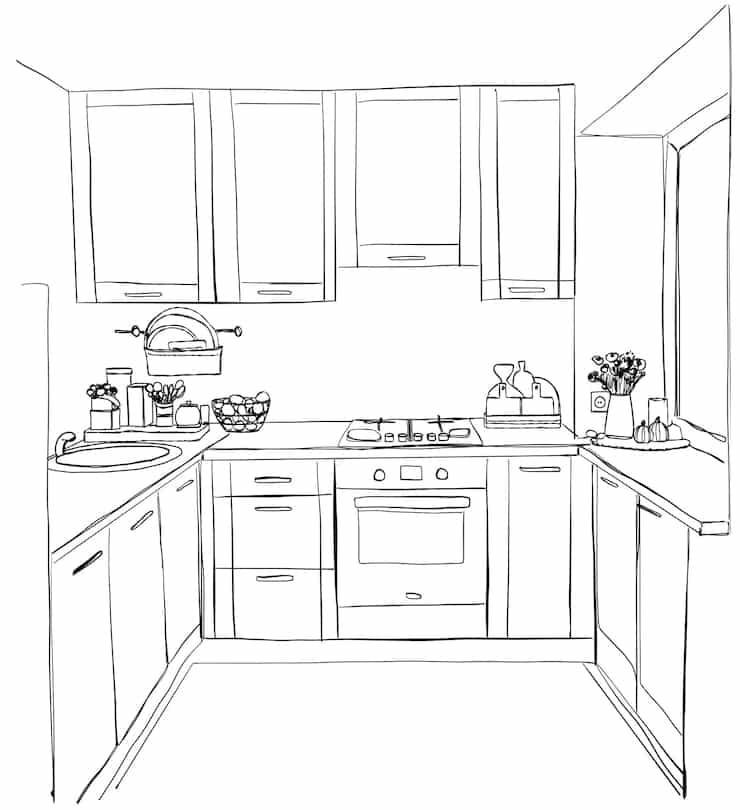
Start your sketch with simple shapes like rectangles and circles. These shapes form kitchen objects.
Draw boxes for cabinets and counters. Use circles or ovals for plates and sinks.
- Rectangles for tables, windows, and doors
- Squares for tiles and shelves
- Circles for plates, knobs, and light fixtures
Planning The Composition
Composition means placing objects in your drawing. It helps balance and guide the viewer’s eye.
Arrange big objects first, like the fridge and stove. Then add smaller items around them.
- Keep space between objects to avoid clutter
- Place important items where the eye can see them easily
- Use empty space to make the drawing calm and clear
Adding Cartoon Elements
Drawing a cartoon kitchen is fun and creative. You can add unique touches to make it lively.
Cartoon elements help bring energy and playfulness to your kitchen scene.
Exaggerating Features
Make shapes bigger or smaller than usual. This draws attention and creates humor.
- Draw oversized pots and pans
- Use large, round knobs on cabinets
- Make the sink unusually deep or wide
- Stretch the kitchen windows for extra light
Creating Fun Appliances
Give your appliances funny shapes and bright colors. Add faces or patterns to make them playful.
| Appliance | Fun Idea |
| Refrigerator | Round edges with smiley face magnets |
| Oven | Big eyes as knobs and a wide mouth door |
| Toaster | Bright colors and tiny feet to look alive |
| Microwave | Buttons shaped like stars or hearts |
Designing Playful Furniture
Make chairs and tables with fun shapes and patterns. Use bright colors and soft lines.
| Furniture | Playful Design Ideas |
|---|---|
| Table | Cloud-shaped top with colorful legs |
| Chair | Rounded backrest that looks like a smile |
| Stool | Polka dot cushions and wavy legs |

Credit: www.freepik.com
Detailing The Scene
Drawing a cartoon kitchen is more fun when you add details. These details make your scene lively and interesting. You can use textures, accessories, and lighting effects to improve your drawing.
Let’s explore how to add textures and patterns, include kitchen accessories, and use shadows and highlights. These tips will help your cartoon kitchen feel real and full of character.
Adding Textures And Patterns
Textures and patterns bring life to flat drawings. Use lines, dots, or shapes to show materials like wood, tile, or metal. For example, draw small squares to show tiles on the floor.
- Use crosshatch lines to show wood grain on cabinets
- Add dots or specks to represent stone countertops
- Draw small circles or diamonds for patterned tiles
- Use wavy lines to show fabric on curtains or towels
Including Kitchen Accessories
Accessories make the kitchen look lived-in and useful. Add items like pots, pans, plates, and utensils to fill empty spaces. Place a fruit bowl on the counter or a tea kettle on the stove for charm.
| Accessory | Where to Place | Drawing Tip |
| Fruit bowl | Countertop | Use bright colors for fruits |
| Cutting board | Near sink | Draw wood texture with lines |
| Utensil holder | Next to stove | Add small spoon and spatula shapes |
| Tea kettle | On stove | Use shiny metal effect with highlights |
Enhancing With Shadows And Highlights
Shadows and highlights create depth. Shadows show where light does not reach. Highlights show shiny or raised surfaces. Use light gray or white to paint these effects carefully.
- Shade under shelves and appliances for shadows
- Lightly color edges of objects for highlights
- Use softer pencil strokes for smooth surfaces
- Keep shadows consistent with light source direction
Inking The Drawing
Inking is the process of tracing your pencil sketch with a pen. It makes your cartoon kitchen clear and bold.
Use smooth, steady lines to give your drawing a clean look. Take your time to avoid mistakes.
Outlining Key Features
Start by outlining the main parts of the kitchen. These include cabinets, counters, and appliances.
Use thicker lines for objects in front. Use thinner lines for background details. This adds depth to your drawing.
- Trace the shapes of cabinets and drawers
- Draw around the stove and sink carefully
- Outline kitchen utensils and small items
- Use varied line thickness for better contrast
Cleaning Up Sketch Lines
After inking, wait for the ink to dry completely. Then erase pencil lines gently to keep the ink intact.
Remove all leftover sketch marks. This makes your cartoon kitchen look neat and finished.
- Use a soft eraser for best results
- Erase slowly to avoid smudging ink
- Check your drawing from a distance to spot stray lines
- Touch up any thin or broken ink lines if needed
Coloring Techniques
Coloring brings your cartoon kitchen to life. It makes objects look real and fun.
Good coloring helps viewers understand the space and details easily.
Choosing A Color Palette
Pick colors that match the kitchen style you want. Use warm colors for a cozy feel.
Limit your palette to a few colors to keep the design simple and clear.
- Choose 2-3 main colors for walls and furniture
- Add 1-2 accent colors for details like utensils
- Use neutral colors for the background
Applying Flat Colors
Flat colors fill each part of the kitchen with solid color. This creates a clean look.
Keep colors inside the lines for neatness. Use different colors to separate objects.
- Fill cabinets with one solid color
- Use a different color for the countertop
- Color appliances separately
- Keep the floor color distinct
Adding Depth With Shading
Shading shows where light hits and shadows fall. This adds depth and realism.
Use a darker shade of the base color for shadows. Use a lighter shade for highlights.
- Shade under shelves and cabinets
- Add shadows behind objects
- Highlight edges facing the light source
- Blend shades gently for smooth transitions
Final Touches
After drawing the main parts of your cartoon kitchen, it’s time to add the final touches. These details bring your drawing to life and make it fun to look at.
Focus on the background, fun details, and refining your work. These steps help complete your cartoon kitchen drawing.
Adding Background Elements
Background elements create a setting for your kitchen. Think about walls, windows, or a clock on the wall. They make your drawing feel complete.
- Draw a simple tiled wall behind the kitchen counters.
- Add a window with curtains to show outside light.
- Place a clock or a calendar on the wall.
- Include kitchen shelves with jars or plates.
Incorporating Fun Details
Fun details add personality to your kitchen. Small objects and decorations make your cartoon more interesting and playful.
| Detail | Why It’s Fun |
| Cartoon fruit bowl | Shows color and life |
| Smiling toaster | Adds character |
| Funny kitchen notes | Gives a story |
| Little cat near the door | Creates warmth |
Reviewing And Refining
Look over your drawing carefully. Fix any lines or shapes that seem off. Make sure all parts fit well together.
- Check line thickness and erase stray marks.
- Balance the colors to keep the drawing bright.
- Make sure objects do not overlap awkwardly.
- Add shading or highlights for depth.
- Ask someone else to look and give feedback.

Credit: www.dreamstime.com
Credit: easy-peasy.ai
Frequently Asked Questions
What Materials Do I Need To Draw A Cartoon Kitchen?
You need paper, pencils, erasers, and colored markers or pencils. Optional tools include rulers and digital drawing tablets for precision.
How Do I Start Drawing A Cartoon Kitchen Layout?
Begin by sketching basic shapes for cabinets, counters, and appliances. Use simple rectangles and squares to outline the kitchen space.
What Are Key Features To Include In A Cartoon Kitchen?
Include elements like a stove, refrigerator, sink, cabinets, and a window. Add exaggerated details for a fun cartoon style.
How Can I Add Color To My Cartoon Kitchen Drawing?
Use bright, contrasting colors to make the kitchen lively. Apply color evenly and highlight key areas for depth.
Conclusion
Drawing a cartoon kitchen can be fun and simple. Start with basic shapes and add details step by step. Use bright colors to make your kitchen lively. Practice often to improve your skills quickly. Remember, every artist begins with small steps.
Keep your drawings clear and playful. Soon, your cartoon kitchen will look great and unique. Enjoy the process and keep creating!