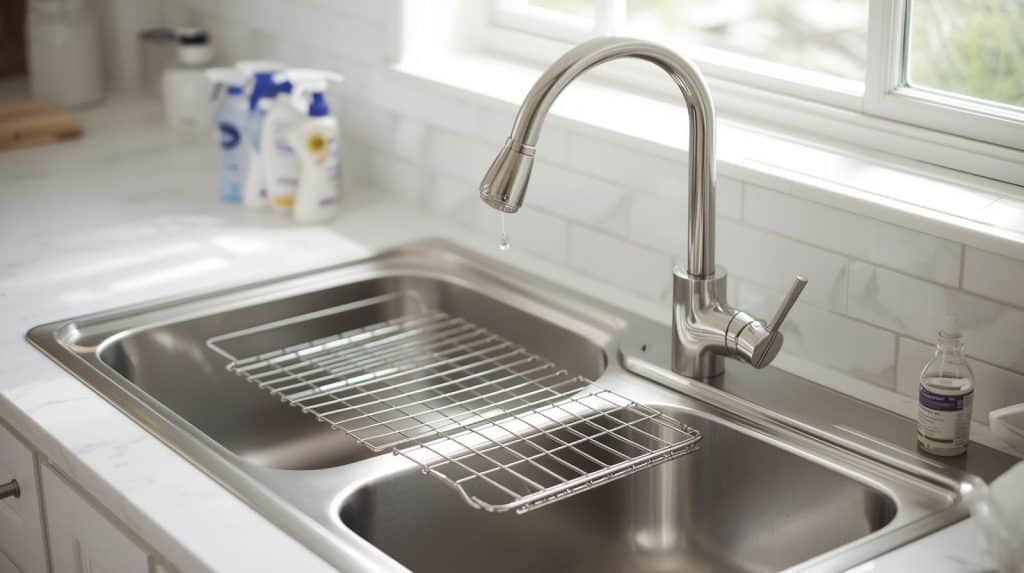
Your stainless steel kitchen sink rack is one of the hardest working tools in your kitchen. It holds your dishes, keeps your utensils organized, and helps water drain away quickly.
If you’re wondering How to Clean Stainless Steel Kitchen Sink Rack, over time it can get dirty, stained, and even start to rust if not cleaned properly. If you want your sink rack to look shiny and last longer, you need to know the right way to clean it. You’ll discover simple, effective steps that anyone can follow to bring your stainless steel sink rack back to life.
Keep reading, and you’ll never have to worry about a dull, grimy rack again.
Choosing The Right Cleaning Tools
Cleaning your stainless steel kitchen sink rack is easier with the right tools. Picking suitable cleaning items protects the rack and keeps it shiny.
Use gentle tools that do not scratch or damage the steel surface. This guide helps you select the best brushes, cloths, and cleaners.
Soft Brushes And Sponges
Soft brushes and sponges remove dirt without harming the steel finish. They reach small corners and clean well.
- Use nylon or silicone brushes for gentle scrubbing.
- Choose sponges with soft sides, not abrasive pads.
- Avoid wire brushes that can scratch the surface.
Non-abrasive Cloths
Non-abrasive cloths dry and polish the sink rack without leaving marks. Microfiber cloths are a good option.
| Cloth Type | Use |
| Microfiber | Cleaning and polishing |
| Cotton | Light wiping and drying |
| Flannel | Gentle dusting |
Suitable Cleaning Agents
Choose cleaning agents safe for stainless steel. Avoid harsh chemicals that cause stains or damage.
- Mild dish soap mixed with warm water works well.
- White vinegar helps remove water spots and mineral buildup.
- Baking soda paste cleans stubborn stains gently.
- Do not use bleach or ammonia-based cleaners.

Credit: www.youtube.com
Preparing The Sink Rack For Cleaning
Cleaning your stainless steel kitchen sink rack starts with good preparation. This helps make the cleaning process easier and more effective.
Focus on removing loose debris and food particles first. Then, detach the rack if you can. These steps protect the sink and keep the rack in good shape.
Removing Debris And Food Particles
Clear away leftover food and debris from the rack before washing. This prevents clogging your drain or blocking water flow.
- Use a soft brush or cloth to sweep off crumbs.
- Rinse the rack under running water to flush away small bits.
- Check corners and joints for stuck particles.
- Remove any grease or sticky residue with mild soap.
- Dry the rack slightly to avoid slipping when handling.
Detaching The Rack If Possible
Many sink racks can be removed for better cleaning. Detaching makes it easier to scrub all sides without risk of damage.
| Action | Tip |
| Locate attachment points | Look for clips or hooks holding the rack |
| Use tools if needed | A screwdriver or pliers may help loosen fasteners |
| Lift gently | Avoid bending or scratching the rack |
| Place rack on flat surface | Prepare for thorough cleaning |
Step-by-step Cleaning Process
Cleaning your stainless steel kitchen sink rack keeps it shiny and free from grime. Dirt and soap scum can build up over time. Regular cleaning helps maintain its look and function.
This guide shows a simple way to clean the rack using common household items. Follow each step to get the best results.
Soaking The Rack
Start by soaking the rack to loosen dirt and stains. Use warm water mixed with mild dish soap. This helps break down grease and grime stuck on the metal.
- Fill a basin or your kitchen sink with warm water.
- Add a few drops of mild dish soap.
- Submerge the rack fully in the soapy water.
- Let it soak for 15 to 20 minutes.
Scrubbing Stubborn Stains
After soaking, scrub the rack to remove any tough stains or rust spots. Use a non-abrasive sponge or brush. Avoid steel wool as it can scratch the surface.
| Cleaning Tool | Purpose |
|---|---|
| Soft sponge | Remove light dirt and soap scum |
| Soft-bristle brush | Clean corners and crevices |
| Baking soda paste | Lift stubborn stains without scratching |
Make a baking soda paste by mixing baking soda with water. Apply it to tough spots and gently scrub. Rinse to check if stains are gone. Repeat if needed.
Rinsing Thoroughly
Rinse the rack well to remove soap and cleaning residue. Use clean, warm water for this. Leaving soap on the rack can cause spotting or dullness.
- Hold the rack under running warm water.
- Use your hands or sponge to help wash off soap.
- Check all sides and corners carefully.
- Shake off excess water before drying.
Dealing With Tough Stains And Rust
Stainless steel kitchen sink racks can get stains and rust over time. Cleaning them keeps your kitchen looking fresh.
Use simple ingredients or products to remove tough marks safely. This guide explains easy ways to clean your rack.
Using Baking Soda And Vinegar
Baking soda and vinegar create a gentle scrub that helps remove stains and rust. They are safe for stainless steel.
Sprinkle baking soda on the rack. Then spray vinegar over it. Wait for 10 minutes to let it work.
- Scrub with a soft brush or cloth
- Rinse with warm water
- Dry with a clean towel
Applying Lemon And Salt
Lemon juice and salt make a natural cleaner that fights rust and stains. The acid in lemon helps dissolve marks.
Cut a lemon in half and dip it in salt. Rub the lemon on the rust spots gently. Let it sit for 5 minutes.
- Use a soft cloth to scrub the area
- Wash the rack with warm water
- Dry it completely to stop rust
Commercial Rust Removers
Commercial rust removers work fast on tough rust. Choose a product safe for stainless steel surfaces.
Follow the instructions on the label. Usually, apply the remover, wait a few minutes, and wipe off.
- Wear gloves to protect your skin
- Test on a small spot first
- Rinse well after cleaning
Maintaining Shine And Preventing Damage
Stainless steel kitchen sink racks add style and function to your kitchen. Keeping them clean helps maintain their shine and stops damage.
Regular care protects the metal from rust and stains. Simple cleaning habits keep your rack looking new for years.
Drying Techniques
Always dry your stainless steel rack after washing. Water left on the surface can cause spots or rust.
Use a soft cloth or towel to wipe the rack dry. Avoid air drying as it leaves water marks.
- Use microfiber cloths to prevent scratches
- Dry all corners and crevices thoroughly
- Wipe after every wash to keep shine
Regular Cleaning Schedule
Clean your sink rack weekly to avoid buildup of dirt and grime. Frequent cleaning keeps the metal bright and fresh.
Use mild soap and warm water for daily washes. Deep clean once a month with gentle scrubbing.
- Wash with dish soap and a soft sponge
- Rinse well to remove soap residue
- Deep clean with baking soda paste monthly
Avoiding Harsh Chemicals
Stay away from bleach, ammonia, and strong cleaners. These chemicals can dull and damage stainless steel.
Use natural or mild cleaning solutions instead. They clean well without harming the metal surface.
- Do not use abrasive pads or steel wool
- Choose gentle cleaners like dish soap or vinegar
- Test new cleaners on a small area first

Credit: www.amazon.com
Eco-friendly Cleaning Alternatives
Cleaning your stainless-steel kitchen sink rack can be safe for the environment. Using natural ingredients reduces harsh chemicals. These alternatives clean well and protect your home.
Below are simple ways to keep your sink rack shiny and clean with eco-friendly methods. They use items you can find at home.
Natural Ingredients
Many natural ingredients help remove stains and grime from stainless steel. They are gentle and effective. You can mix or use them alone for cleaning.
- Baking soda: Scrubs without scratching and removes odors.
- White vinegar: Cuts grease and kills bacteria.
- Lemon juice: Brightens and adds a fresh scent.
- Olive oil: Polishes and prevents water spots.
Homemade Cleaning Solutions
Combine natural ingredients to make easy cleaning solutions for your sink rack. These mixtures save money and avoid toxic chemicals.
| Ingredients | How to Use |
| Baking soda and water | Make a paste, scrub rack gently, rinse well. |
| White vinegar and water | Mix equal parts, spray on rack, wipe clean. |
| Lemon juice and baking soda | Apply paste on stains, let sit 10 minutes, rinse. |
| Olive oil | Use a soft cloth to rub and polish after cleaning. |
Frequently Asked Questions
How Often Should I Clean My Stainless-Steel Sink Rack?
Clean your stainless steel sink rack weekly to prevent grime buildup. Frequent cleaning maintains shine and hygiene. Use mild soap and a soft sponge for best results. Regular care extends the rack’s lifespan and keeps your kitchen tidy.
What’s The Best Cleaner For Stainless Steel Sink Racks?
Use a mixture of warm water and mild dish soap. Avoid harsh chemicals or abrasive scrubbers that can scratch the surface. For tough stains, try a baking soda paste. Always rinse thoroughly and dry to prevent water spots.
Can Vinegar Help Remove Stains From The Sink Rack?
Yes, vinegar effectively removes hard water stains and mineral deposits. Spray diluted white vinegar, let it sit for a few minutes, then wipe clean. Avoid prolonged exposure to prevent damage. Vinegar is a natural, safe, and eco-friendly cleaner option.
How Do I Prevent Rust On My Stainless-Steel Rack?
Keep the rack dry after cleaning to avoid rust formation. Wipe it down with a soft cloth regularly. Avoid using steel wool or harsh scrubbers that can damage the protective layer. Proper maintenance prevents corrosion and keeps the rack looking new.
Conclusion
Cleaning your stainless steel sink rack keeps it shiny and germ-free. Regular care prevents rust and dullness. Use mild soap and a soft cloth. Avoid harsh cleaners to protect the finish. Rinse thoroughly to remove soap residues. Dry with a clean towel to prevent water spots.
This routine takes only a few minutes. A clean rack enhances your kitchen’s beauty. It ensures your utensils stay spotless. An easy habit with big benefits. Your kitchen deserves this simple care. Enjoy a sparkling sink every day. Keep it part of your cleaning routine.
Your sink rack will thank you!